
Online Chemistry Tuition
Online, offline, or hybrid tuition?
One of my very first A-level students lived about fifteen kilometres away and wanted to have face-to-face tuition. She was underperforming significantly during her AS year, so much so that by March she was heading for a grade C, despite harbouring ambitions to study medicine at university.
Back then, I travelled the hour-long round trip to her and tutored at the only time that vaguely worked for either of us; even then, it wasn’t a great time to tutor. She used to leave her family at the dinner table mid-meal. I didn’t eat with my family either, and I didn’t have time to teach anyone else that evening. I had to decide what to tutor and which materials to bring with me well in advance, meaning little flexibility if she wanted more practice on something she had just covered at school. I would leave her some work that she would then send back to me, often by mail because she didn’t have a scanner.
I am still very much a fan of pen and paper, textbook-based learning, the traditional ‘offline only’ option for self-directed study. I am in total agreement with the Swedish government’s decision to reduce screen time in education. The problem I have with this approach is that the phrase ‘online learning’ bundles together types of e-learning that don’t work very well with others that provide enormous advantages, both for the tutor and the tutee.
E-learning courses are not the same as online tuition.
Online courses such as Uplearn don’t teach good study skills; they can’t see when a student just needs a little encouragement to figure things out on their own, rather than providing a hint or the answer, and they don’t provide deep insight on where you can make the biggest improvements. Some YouTube videos contain gross inaccuracies that are only obvious to an expert in the subject; furthermore, they give a false sense of competence unless they are being used as part of an active learning strategy. More importantly, videos and algorithmic courses have a distinct disadvantage compared to being tutored by a real human being – the human has a vested interest in helping you improve and actually cares about how well you do!
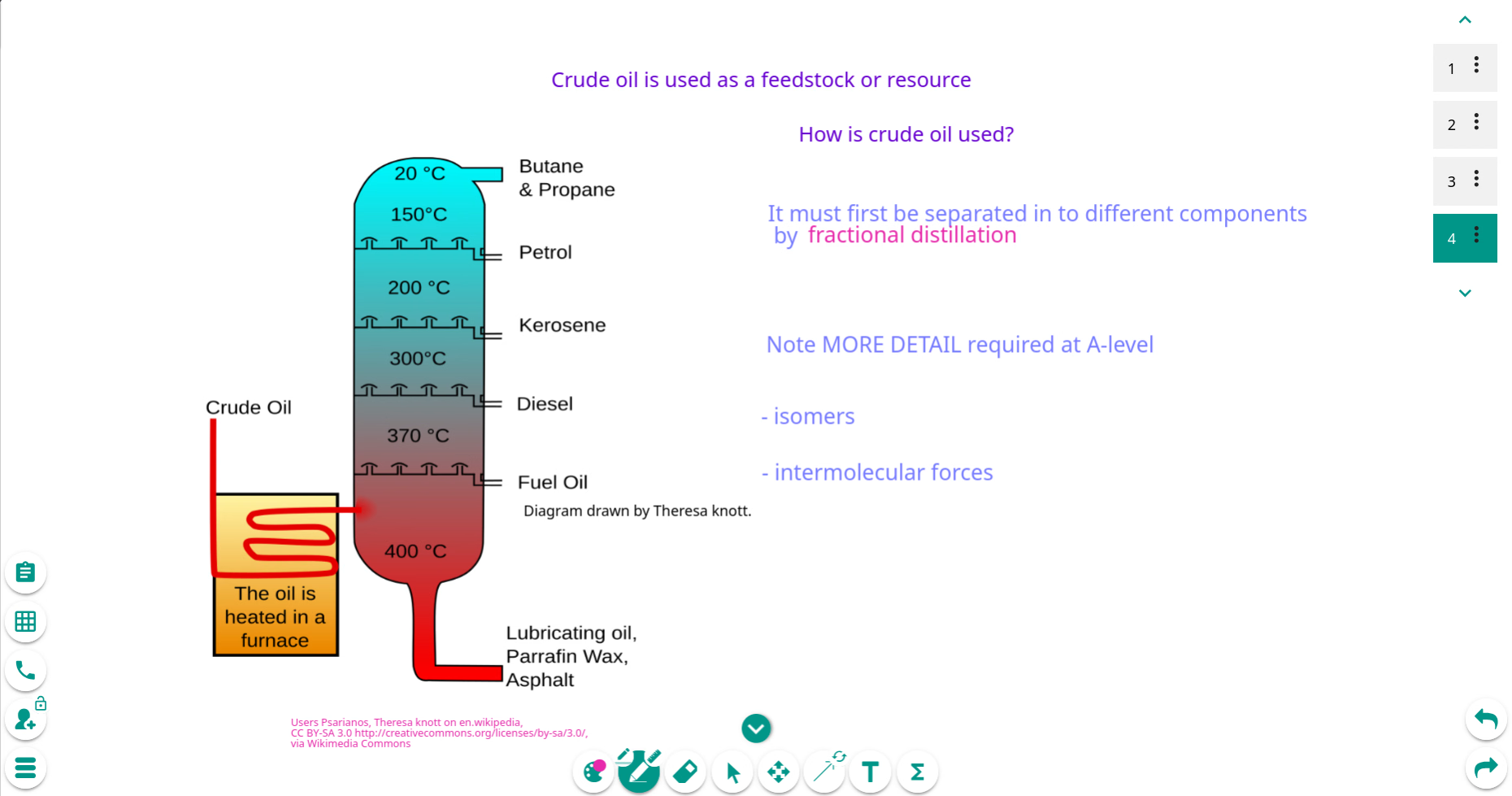
90% of my students are now online, and I wouldn’t do this if I felt it was inferior; I don’t consider the tuition to be any different in quality or outcome from in-person tuition. This is because it is still provided by somebody who has nearly a decade of experience tutoring students in chemistry, with the same amount of care and attention to what the student needs to do to improve. Studies have shown that good contact with teachers as well as their high communication skills can significantly reduce the occurrence of many disadvantages of e-learning (see Stecuła, K.; Wolniak, R. Open Innov. Technol. Mark. Complex. 2022, 8, 159). This has also been my experience; despite being mostly online, my students are still improving by a grade or more, still achieving the top grades, and also getting in to Oxford and Cambridge. This is partly down to the tutorials being delivered by the same tutor, but I also believe it is because I have chosen to use the best whiteboard in the business to tutor online, Bitpaper. I chose this particular platform for its ability to mimic closely what would happen in person. You can do almost everything the same online or offline, with the added benefit that Bitpaper records all our actions, which is a significant advantage if you wish to replay the solutions or go back through the notes after the tutorial.
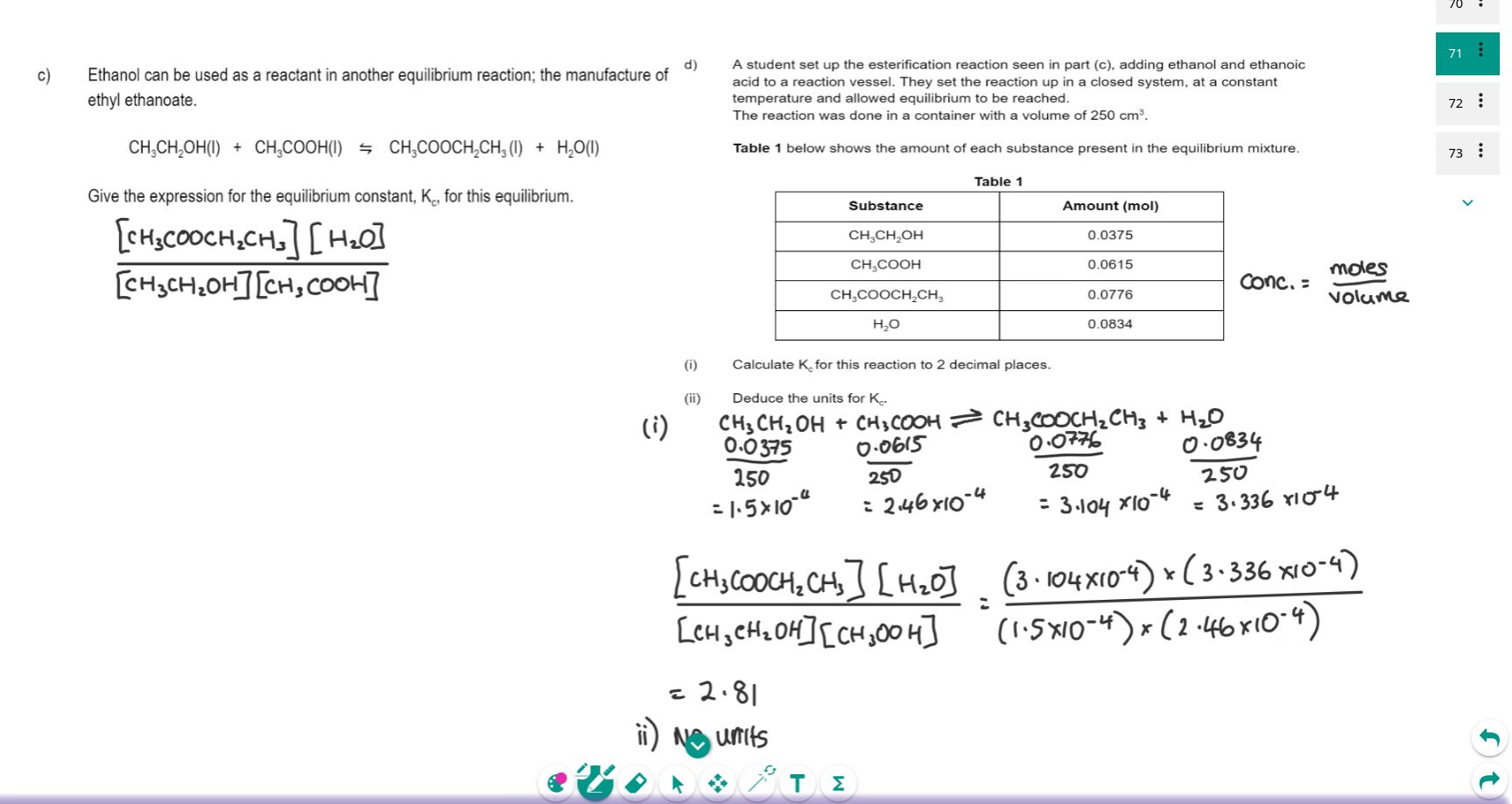
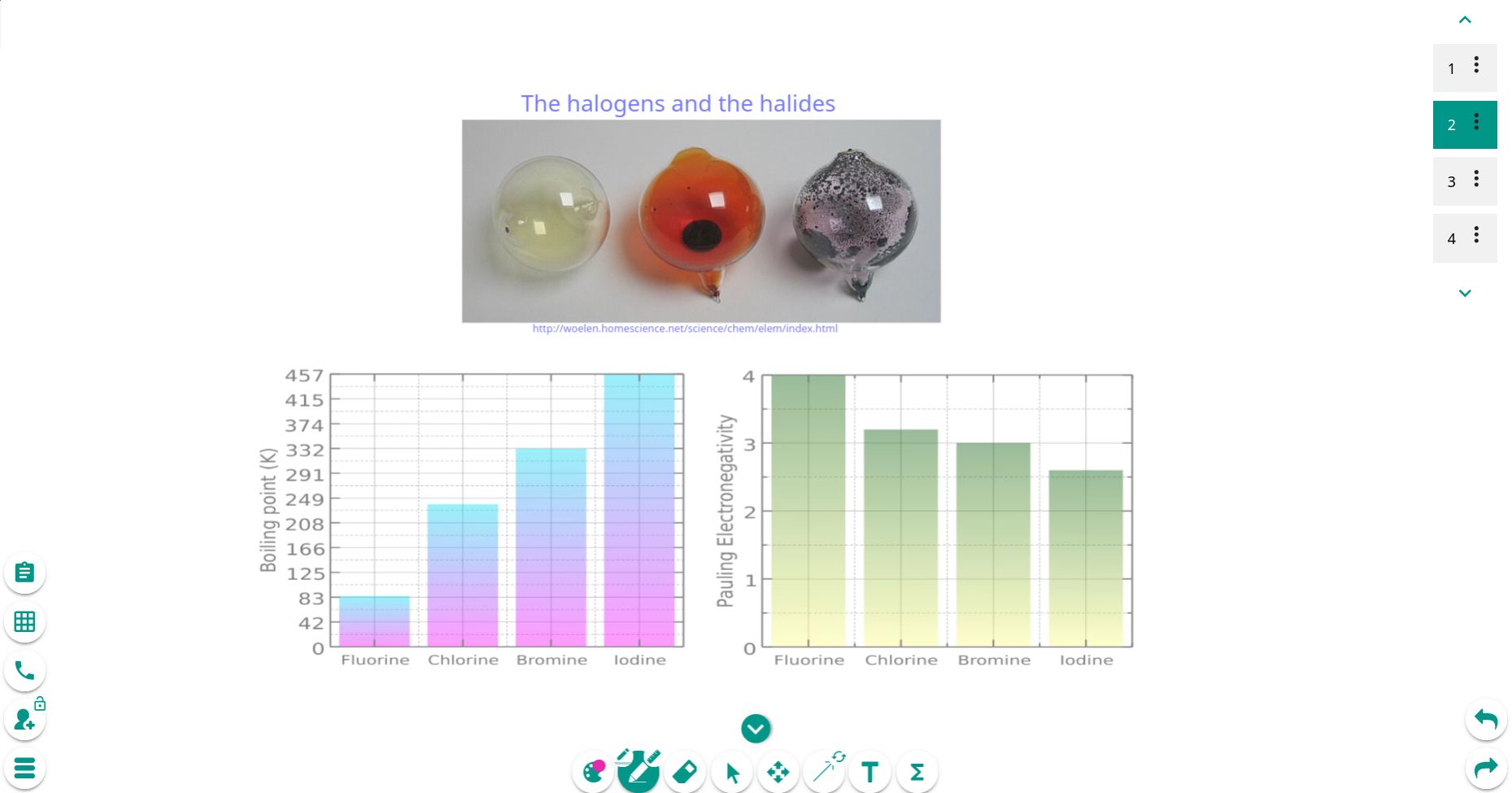
I still strongly encourage using textbooks as a primary resource and help students develop the skills to use them well. I also distribute exercises and questions that can be printed off at home. I consider this to be more ‘hybrid’ learning than remote or online tuition, an attempt to blend the huge advantages in flexible scheduling, time saved not travelling, and having notes stored online with all the same benefits of learning in-person. There are some screenshots of both the online platform and of the materials I distribute on my Instagram page.
“Andrew only taught my son for a short period before Covid-19 put a stop to the 2020 A-levels! However, from the very first lesson we were very impressed. My son told me that Andrew had a friendly approach, which put him at ease, and that he explained difficult concepts in a way that made it easy to understand. Most of the lessons were 1-2-1 in person but, once Covid-19 social distancing restrictions came into force, he was able to quickly & efficiently switch to online teaching.” -Hayley, Parent.
Equipment for online tuition
If you are considering online tuition, there are a few basic requirements to make each session go well. Because we are emulating what would happen in person, the first essential item is something to draw with on screen, such as a stylus, Apple Pencil or other device. I use a Wacom graphics tablet for writing on screen. An iPad will be fine, but mobile phones won’t work with the whiteboard because the screen is too small!.
The whiteboard works with Chrome or Safari web browsers only, and you need a stable, high-speed internet connection. The recommended minimum speed is 20 Mbps download speed and 5 Mbps upload speed. Other than that, no special software is required, unless you live in China or the UAE, where a VPN might be necessary to connect to the whiteboard.
If you are still unsure if online tuition is right for you, I can arrange a free webchat to discuss what works well and how I can help you with your goals. Even if you have had a bad experience with e-learning from school or elsewhere, my tuition is much more targeted and personal, so you will make better progress with your chemistry than you have done so far.
Payment for online sessions must be in advance of the session. The rates are the same as for one-to-one tuition; you can view them here:.
For more information or to enquire about online tuition, please email me, Dr Andrew Roberts.